The rapid evolution of generative artificial intelligence and autonomous agents has fundamentally transformed how digital information is consumed and processed online. As AI systems increasingly act as intermediaries between users and the web, platform developers and web architects have rushed to optimize digital infrastructure for machine readability. Early initiatives, such as serving stripped-down markdown files to AI scrapers and bots, aimed to bypass heavy JavaScript and complex visual layers, streamlining the data ingestion process. However, industry analysts and web engineers have highlighted a critical limitation in this approach: while text-only formats solve the problem of reading, they completely fail at the challenge of execution.
The Evolution of Machine-First Web Architecture
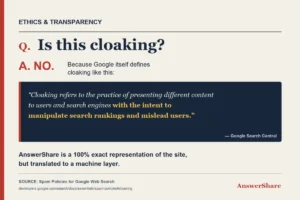
Throughout late 2025 and into 2026, the digital publishing and e-commerce sectors witnessed a significant pivot toward machine-first architecture. Innovations like Cloudflare’s markdown mirrors and various readiness scoring systems were introduced to help websites cater efficiently to non-human traffic. These tools were designed to answer a fundamental question: what is the content of this page?
Yet, experts argue that answering what a page contains is no longer sufficient. Modern autonomous agents are no longer passive searchers looking for information; they are active participants capable of executing multi-step workflows, purchasing products, managing subscriptions, and resolving customer service inquiries. When a website serves a purely text-based markdown mirror, it strips away the interactive layer entirely. Whatever a human visitor could have clicked, triggered, or submitted vanishes by the time the machine receives the file. Consequently, a machine-facing format that lacks action capabilities reduces a dynamic web application to a static, read-only digital brochure.
Structural Integrity and the Accessibility Crisis
To understand why current machine-optimization strategies fall short, one must examine the foundational layers of the modern web. A standard web page consists of a visual presentation layer, a structural markup layer, and the underlying content. For decades, web development has prioritized the visual layer, often relying on heavy JavaScript frameworks that are entirely unnecessary for automated agents.
However, streamlining for machines does not mean discarding structure; rather, it highlights long-standing deficiencies in standard HTML authoring. According to WebAIM’s comprehensive 2026 evaluation of the top one million home pages, 95.9% of analyzed sites failed to meet basic Web Content Accessibility Guidelines (WCAG 2). This figure represents a regression from 94.8% in 2025 and reverses six years of gradual improvements across the web ecosystem.
The evaluation revealed that errors averaged 56.1 per page—a 10.1% increase year-over-year. More critically, three of the six most common failures directly involve missing interactive actions. Form inputs lacking associated labels appeared on 51% of home pages, empty links on 46.3%, and empty buttons on 30.6%. For an AI agent navigating a site via the accessibility tree, an unlabeled input or an empty button is functionally invisible.
Recent academic research underscores the severity of these structural flaws. A study accepted at the 2026 Conference on Human Factors in Computing Systems (CHI) evaluated Anthropic’s Claude Sonnet 4.5 operating as a computer-use agent across 60 everyday tasks. The agent’s success rate plummeted from 78.3% under default conditions to 41.7% when restricted to keyboard-only navigation, and dropped further to 28.3% when the viewport was magnified. The study tested agent performance under conditions mirroring those experienced by human users relying on assistive technology, revealing deep vulnerabilities in how web interfaces communicate interactive potential.
The Feedback Loop Dilemma: Preventing Duplicate Operations
Beyond the initial execution of a task, autonomous agents require clear, programmatic feedback to confirm success or failure. In enterprise development projects involving automated form submissions, engineers have identified a recurring systemic failure: the absence of machine-readable error or success confirmations.
When a human user submits a web form, visual cues such as a confirmation message or a redirected browser page signal that the action is complete. When an AI agent performs the same task on a page lacking structured feedback mechanisms, the machine remains unaware of whether its request was processed. Lacking confirmation, the agent frequently repeats the transaction. This missing feedback loop directly causes duplicate orders, redundant database entries, and accidental double sign-ups. Fixing this issue does not require advanced AI infrastructure; it requires standardizing programmatic responses that confirm state changes in a format machines can interpret.
Platform-Level Intervention: The Shopify Precedent
While individual webmasters struggle to retrofit semantic markup and action-oriented APIs, major enterprise platforms are beginning to solve the execution problem at scale. On August 5, 2026, e-commerce giant Shopify deployed WebMCP tools natively across every storefront built on its proprietary Liquid theme language.
Without requiring any manual installation or code modification from merchants, millions of online stores were instantly equipped with standardized agent capabilities, including catalog search, cart management, checkout execution, and policy lookup. Storefronts automatically loaded an adapter script served from Shopify’s content delivery network. This centralized approach ensured that tool descriptions and behavioral instructions were uniformly distributed to machine callers, directing agents safely through the checkout process without exposing merchants to the underlying technical complexity.
While platform-level integration demonstrates the viability of a declared tool surface, it also underscores the challenges facing independent publishers and smaller web operators who lack enterprise infrastructure. Automated systems deployed by platforms operate on rigid schedules, leaving individual stakeholders to adapt to external technological mandates.
Generative Engine Optimization (GEO) Versus Actionable Architecture
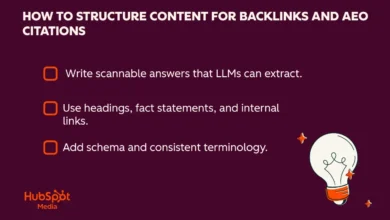
The debate over machine-first web design also intersects with the booming discipline of Generative Engine Optimization (GEO). As search engines evolve into conversational AI assistants, businesses increasingly invest in optimization strategies designed to secure citations and recommendations within LLM-generated answers.
While GEO is undeniably vital for customer acquisition and brand visibility in the current digital economy, industry critics emphasize that it addresses only half of the equation. GEO focuses almost exclusively on discoverability and citation—how easily a text can be read, summarized, and recommended. It does not address whether a system can take action.
Proponents of machine-first architecture argue that treating GEO as the ultimate endpoint of AI optimization is shortsighted. As AI models rapidly transition from passive recommendation engines to active, autonomous agents capable of completing complex end-to-end transactions, static citation optimization will prove insufficient. The companies and platforms best positioned for the future web will be those that combine robust discoverability with fully executable, machine-callable interfaces.
Implications for the Future of Web Development
The persistent reliance on text-only markdown mirrors reflects a transitional phase in web engineering, characterized by an overemphasis on passive reading rather than active participation. As autonomous agents become ubiquitous consumers of digital services, the web development paradigm must shift toward machine-first architectures that prioritize clean semantic HTML, structured data standards, and explicit tool declarations.
The visual design layer, long treated as the primary focal point of web development, must be recognized as secondary to structural integrity and functional actionability. Until web architects address foundational accessibility errors, missing form labels, and absent feedback loops, AI agents will continue to struggle with transactional tasks on the open web. Ultimately, optimizing a website exclusively for reading while stripping away its capacity for action leaves the digital ecosystem unprepared for the exact users most eager to transact.